Citations
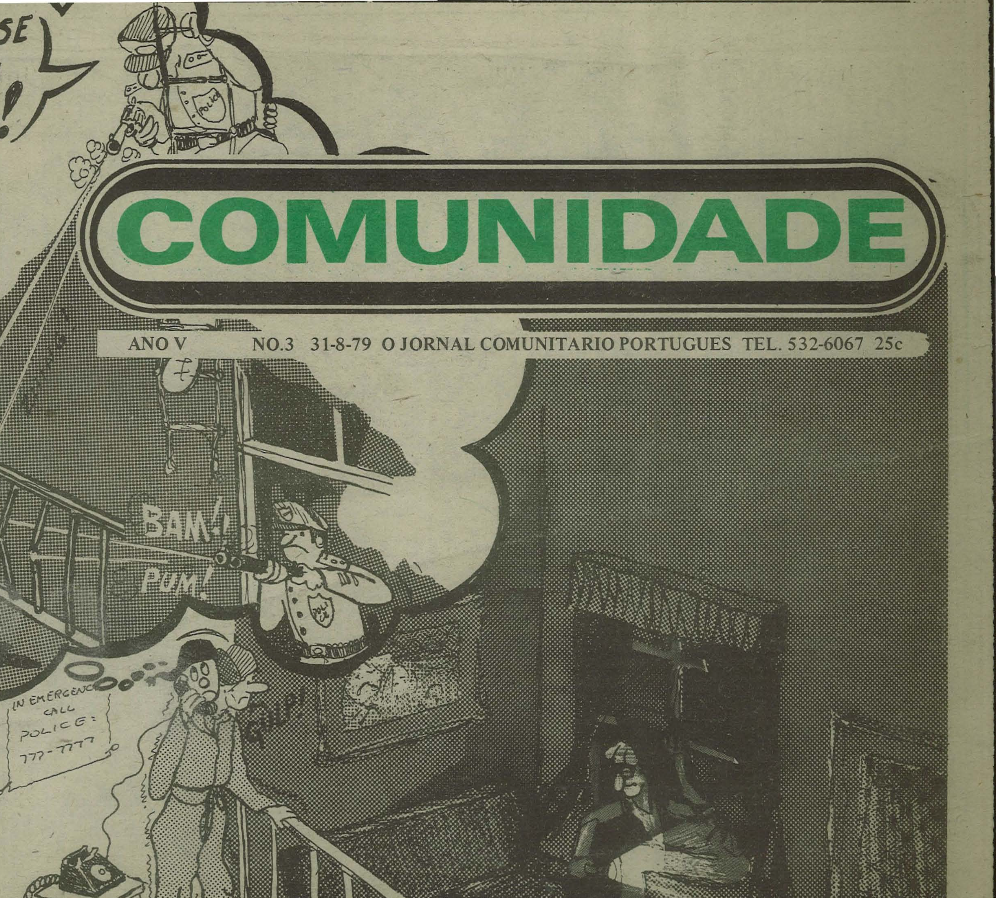
1. Comunidade 1: 4, October 1975. Domingos Marques fonds, 2010-019/005 (1), Clara Thomas Archives and Special Collections (CTASC), York University Libraries.
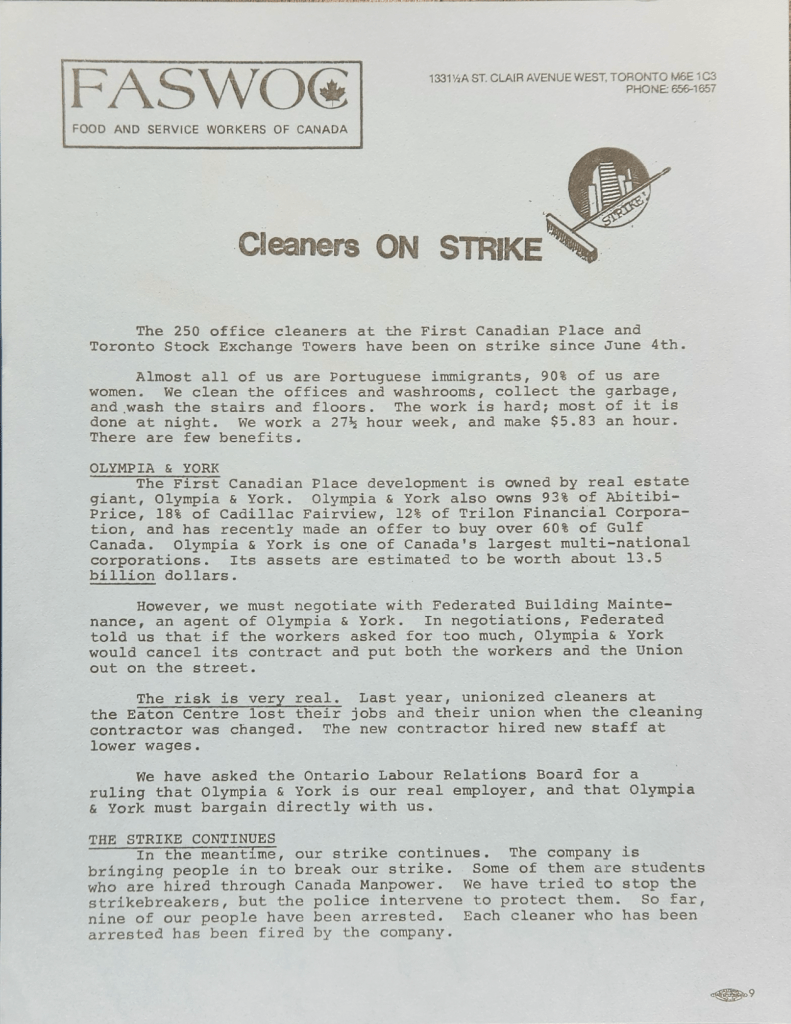
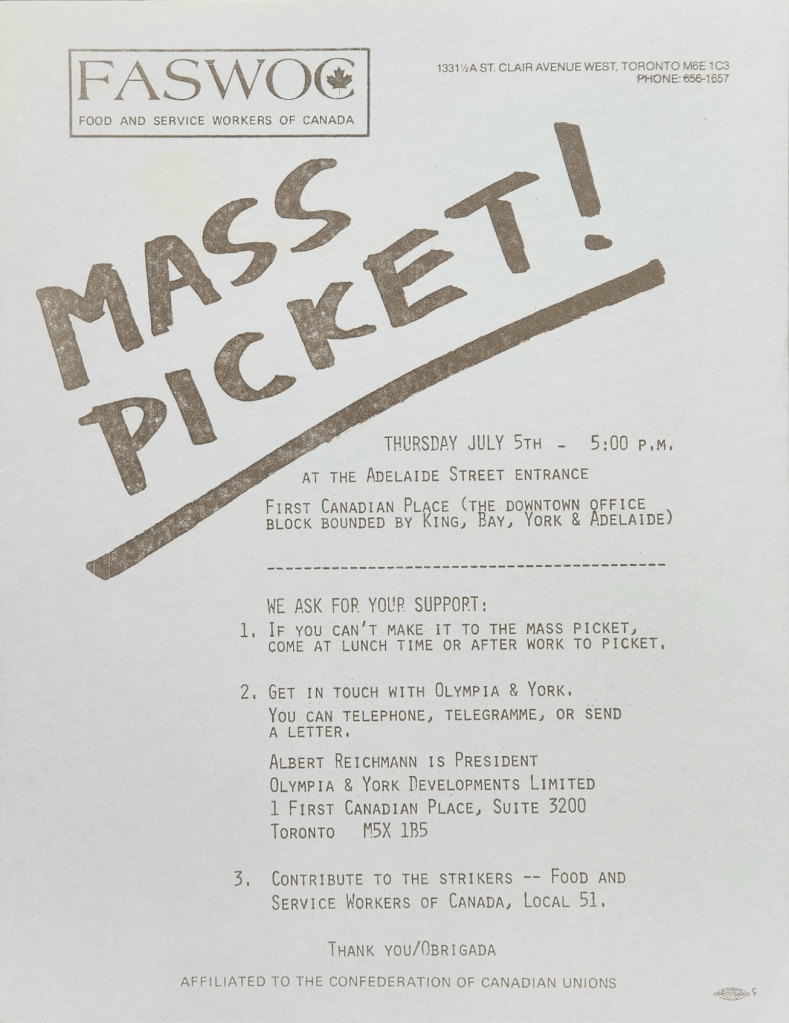
2. Communiqué, Cleaners on Strike, Food and Services Workers of Canada, July 1984. CAW Local 40 fonds, F0610 2011-038 unprocessed box, CTASC.
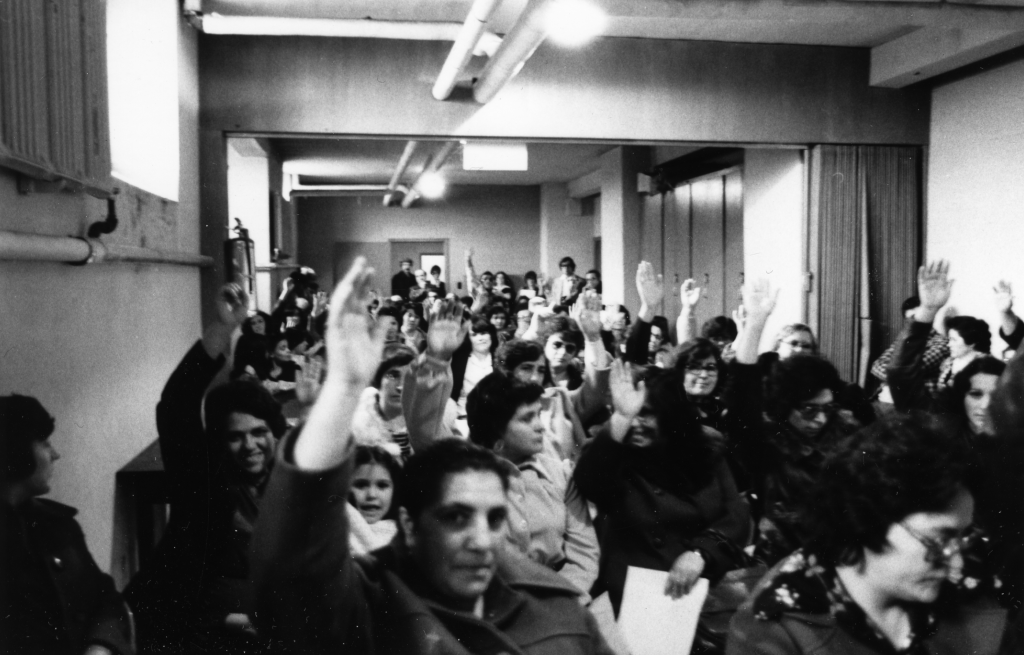
3. Photo of Portuguese cleaners at the Queen’s Park complex voting to unionize under the Service Employees International Union Local 204. April 1975. CAW Local 40 fonds, F0610 2011-038 unprocessed box, CTASC.
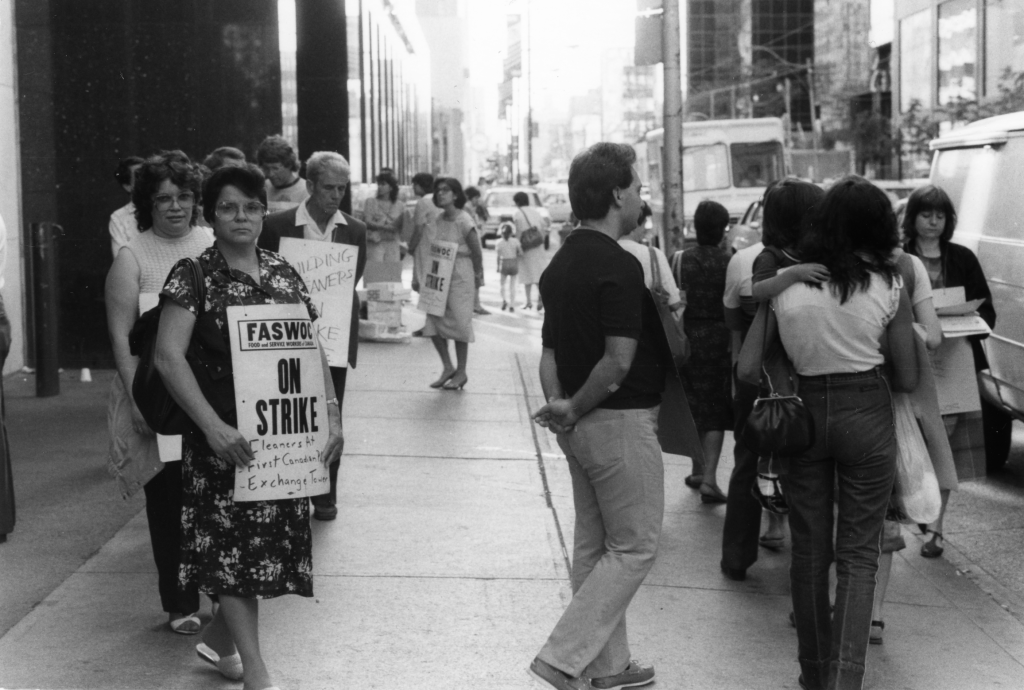
4. Photo of cleaners on the picket line outside the First Canadian Place. June 1984. CAW Local 40 fonds, F0610 2011-038 unprocessed box, CTASC.
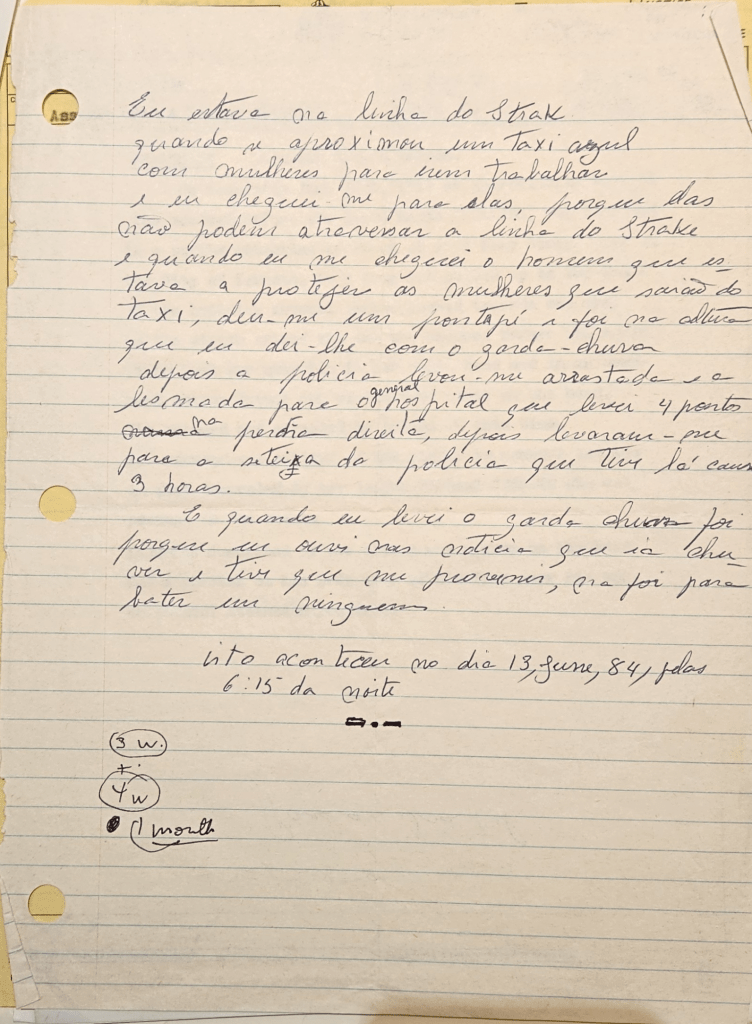
5. Maria Medeiros handwritten police testimony. June 1984. CAW Local 40 fonds, F0610 2011-038 unprocessed box, CTASC.
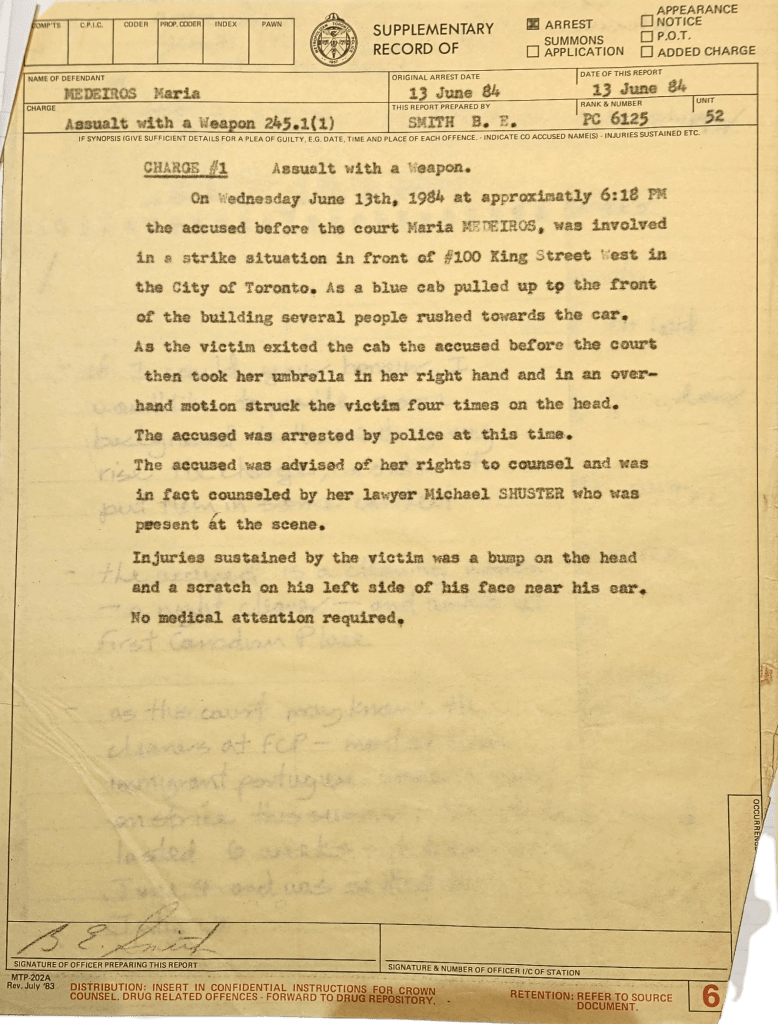
6. Police form for charge of assault on Maria Medeiros. June 13, 1984. CAW Local 40 fonds, F0610 2011-038 unprocessed box, CTASC.
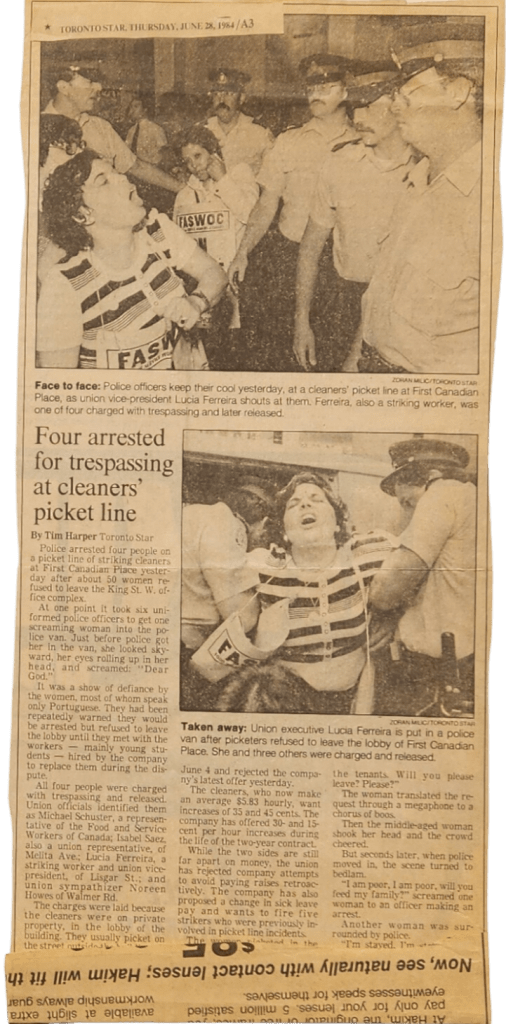
7. News clipping, Tim Harper, “Four Arrested for Trespassing at Cleaners’ Picket Line,” Toronto Star, June 28, 1984. CAW Local 40 fonds, F0610 2011-038 unprocessed box, CTASC.
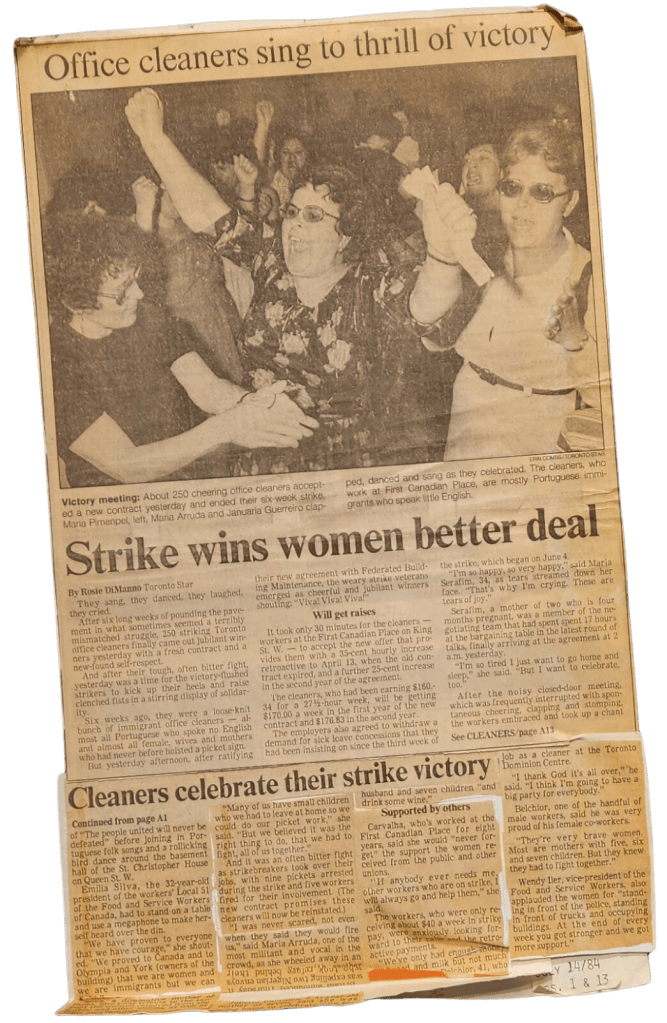
8. News clipping, Rosie DiManno, “Strike wins women better deal,” Toronto Star, 1984. CAW Local 40 fonds, F0610 2011-038 unprocessed box, CTASC.
Portuguese immigrant women have had an occupational niche in Toronto’s cleaning industry, both in private homes and office or commercial buildings. Cleaning was hard work, low waged, precarious, and hazardous. Portuguese “cleaning ladies” unionized in the late 1970s and asserted their labour rights with support from a group of progressive social workers at St. Christopher House who were inspired by Paulo Freire and other proponents of community development work. In 1975, these women organized the Cleaners’ Action program, where they shared information about working conditions and labour rights, and grew their consciousness as workers. In 1978, they launched a newsletter that became a major channel for their labour organization. In 1981, the newsletter merged with St. Chris’ English as Second Language classes, where cleaners began to write articles and produce the publication themselves.
Cleaners’ Action movement helped these workers win significant labour victories in the Queen’s Park legislative building complex, the Toronto-Dominion Towers, and the First Canadian Place. Their most notable labour action was their six-week strike at the First Canadian Place in June-July 1984. About 250 cleaners, 90 per cent of them Azorean women, represented by the Food and Service Workers of Canada (FASWOC) and supported by family members, some politicians and community members, surprised Torontonians for their militancy on the picket line, where they scuffled with police and strike-breakers. One Toronto Star reporter noted that the “strike has turned these docile women, keepers of home and hearth, into a bitter, vociferous group intent on fighting their employers.”
The story of the Cleaner’s Action has been studied, interpreted, and represented numerous times through theatre (especially in the work of Aida Jordão), various public history initiatives led by the Portuguese Canadian History Project, and more recently in a large mural in the Little Portugal neighbourhood made by the international street artist Vhils (Alexandre Farto) – who used some of the photos and newspapers seen here – and in Susana Miranda and Franca Iacovetta’s book Cleaning Up: Portuguese Women’s Fight for Labour Rights in Toronto (2023).
Place of origin:
Toronto, Ontario
Date: 1975, 1984
Archived at:
Clara Thomas Archives and Special Collections, York University Libraries
Fonds: F0573
Finding aid here
F0610