



Citations
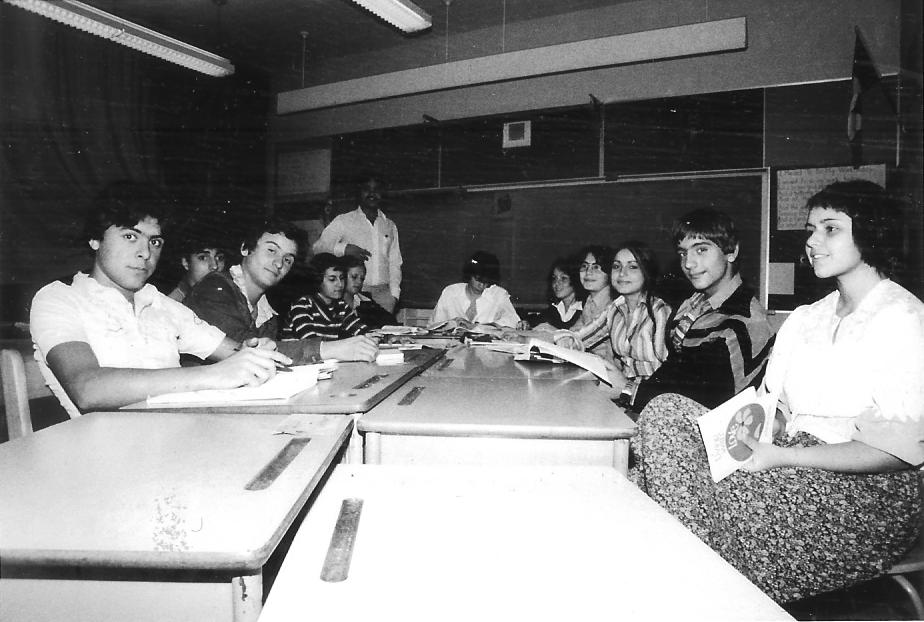
1-2. Photos of a First Portuguese Canadian Club’s Portuguese school class in session. 1970s. Domingos Marques fonds, 2010-019/003, Clara Thomas Archives and Special Collections (CTASC).
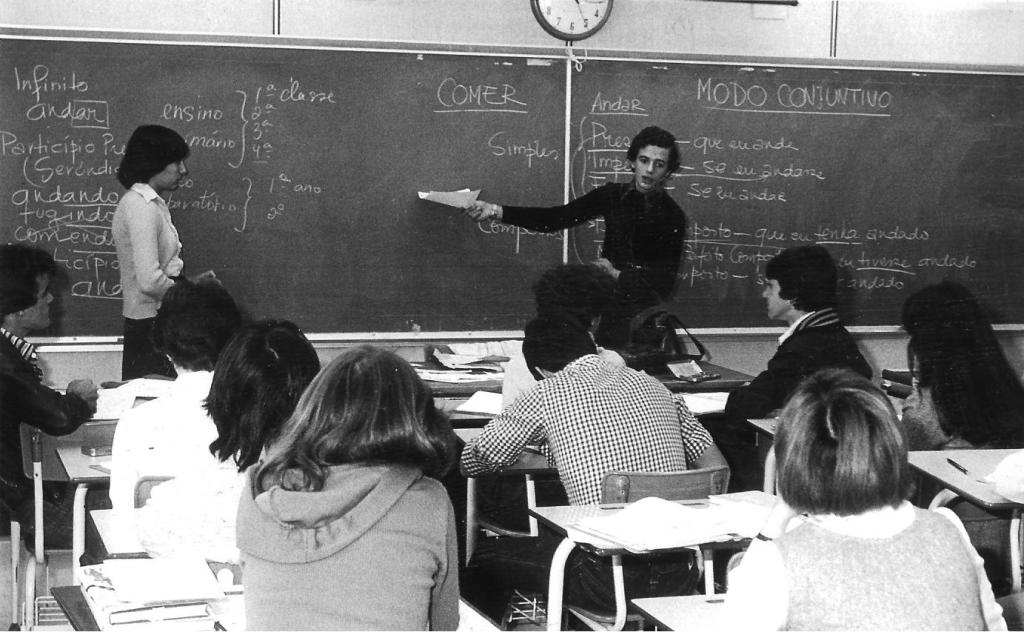
3. Photo of a Portuguese class in session at Harbord Collegiate. October 1978. Domingos Marques fonds, 2010-019/003, CTASC.
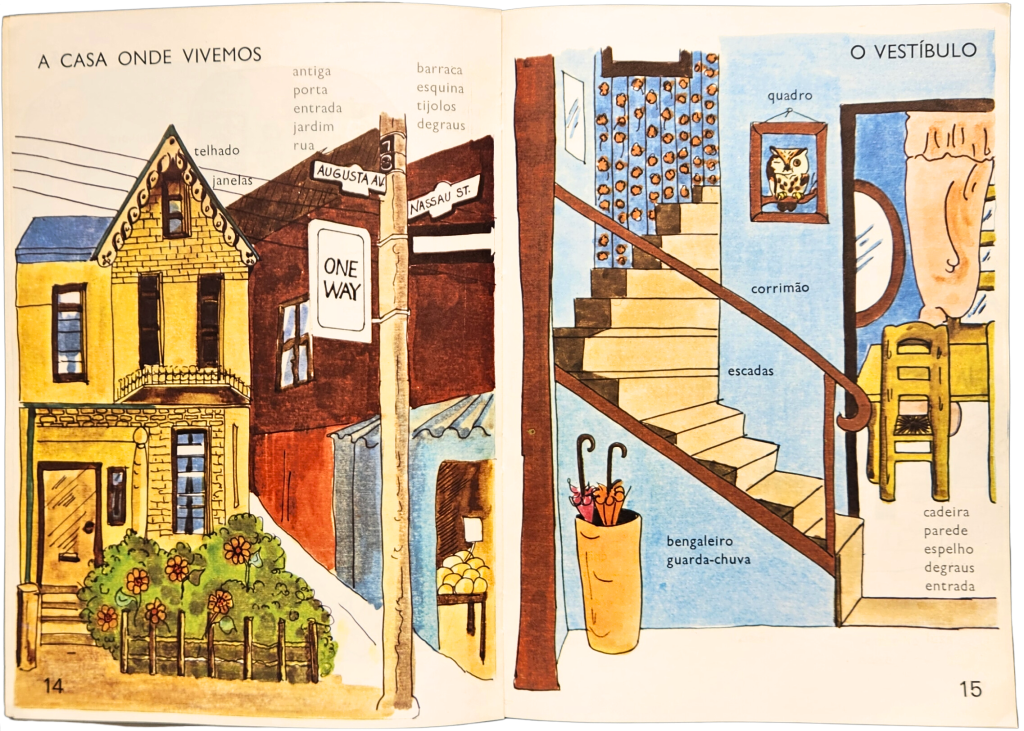
4. Débora de Morais, Português À Volta do Mundo, 1979. David Higgs fonds, 2010-018/001 (49), CTASC.
Portuguese language instruction has been a priority for immigrant parents, especially mainlanders, usually motivated by a desire to return to Portugal one day. Multiple community organizations offered Portuguese language classes, some of them accredited and funded by the Lisbon government. The oldest and largest community school in Toronto is the First Portuguese Canadian Club’s, which opened in 1964 with 18 students and 1 teacher, Branca Améila Gomes. By 1971, it had 21 full-time and 5 supply teachers offering the full Portuguese elementary school curriculum to nearly 400 students on Saturday mornings. Its student enrolment peaked at 762 students in 1974.
In the late 1970s, public school boards in Ontario introduced “heritage” or “international” language programs funded by the federal government. Portuguese language have since been one of the most sought after languages by students in Toronto. For instance, Central High School of Commerce went from 2 classes in 1974 to 9 ranging from 10th to 13th grade in 1978. Portuguese students at Harbord Collegiate, led by Manuel Azevedo, also petitioned for a Portuguese language class to be introduced to the school in 1975.
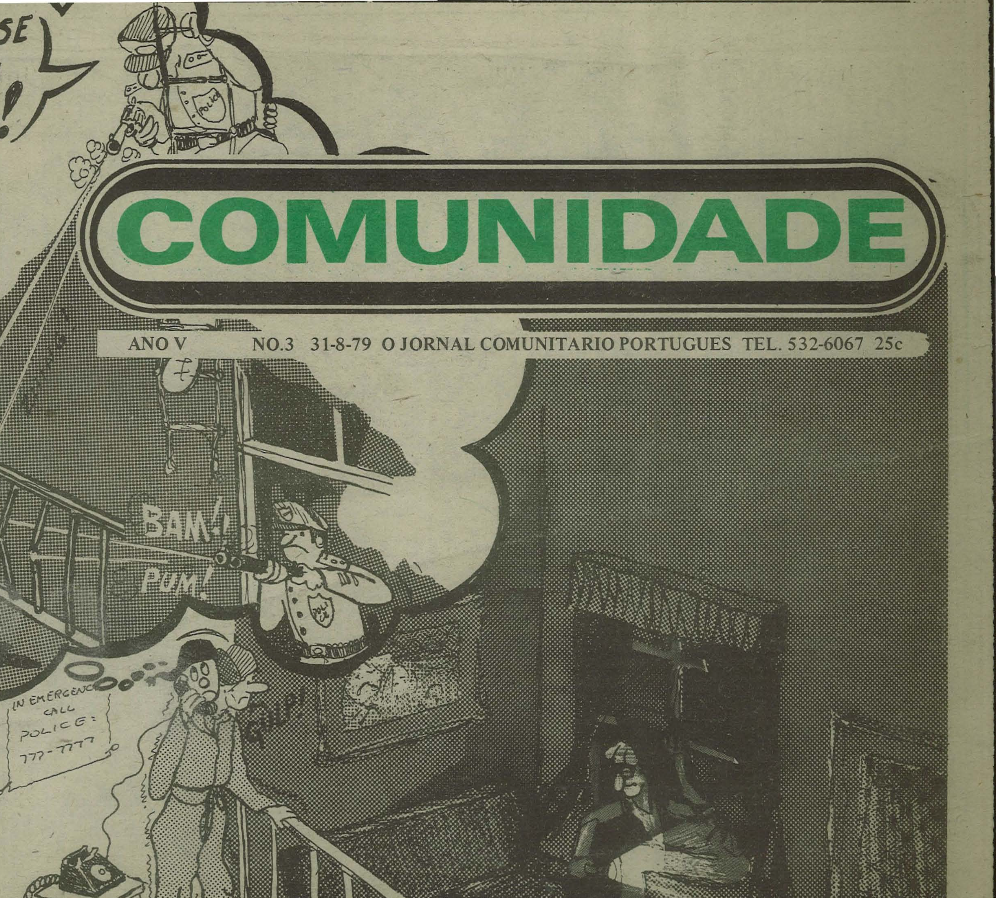
Education in the public school system was a frequent topic discussed in the Comunidade newspaper, especially the low academic expectations placed on Portuguese-Canadian youth, their discrimination and streaming away from academic studies leading to high drop-out rates, and the parents’ unfamiliarity and lack of involvement. Many social workers involved with Comunidade were involved in educational campaigns raising awareness about these issues and advocated for heritage language education.
One article by Natalie Marques in the Comunidade issue of October 12, 1978, noted: “The Portuguese community in Toronto is witnessing a revolution; that of their language. Unlike before, today our Portuguese youth share an immense sense of pride in speaking their mother tongue. The embarrassment and fear of rejection are quickly perishing, while a new wave of awareness of one’s heritage is expanding.”
Place of origin:
Toronto, Ontario
Date: 1978-1979
Archived at:
Clara Thomas Archives and Special Collections, York University Libraries
Fonds:
F0571
Finding aid here
F0573
Finding aid here